Gravel and mulch calculator
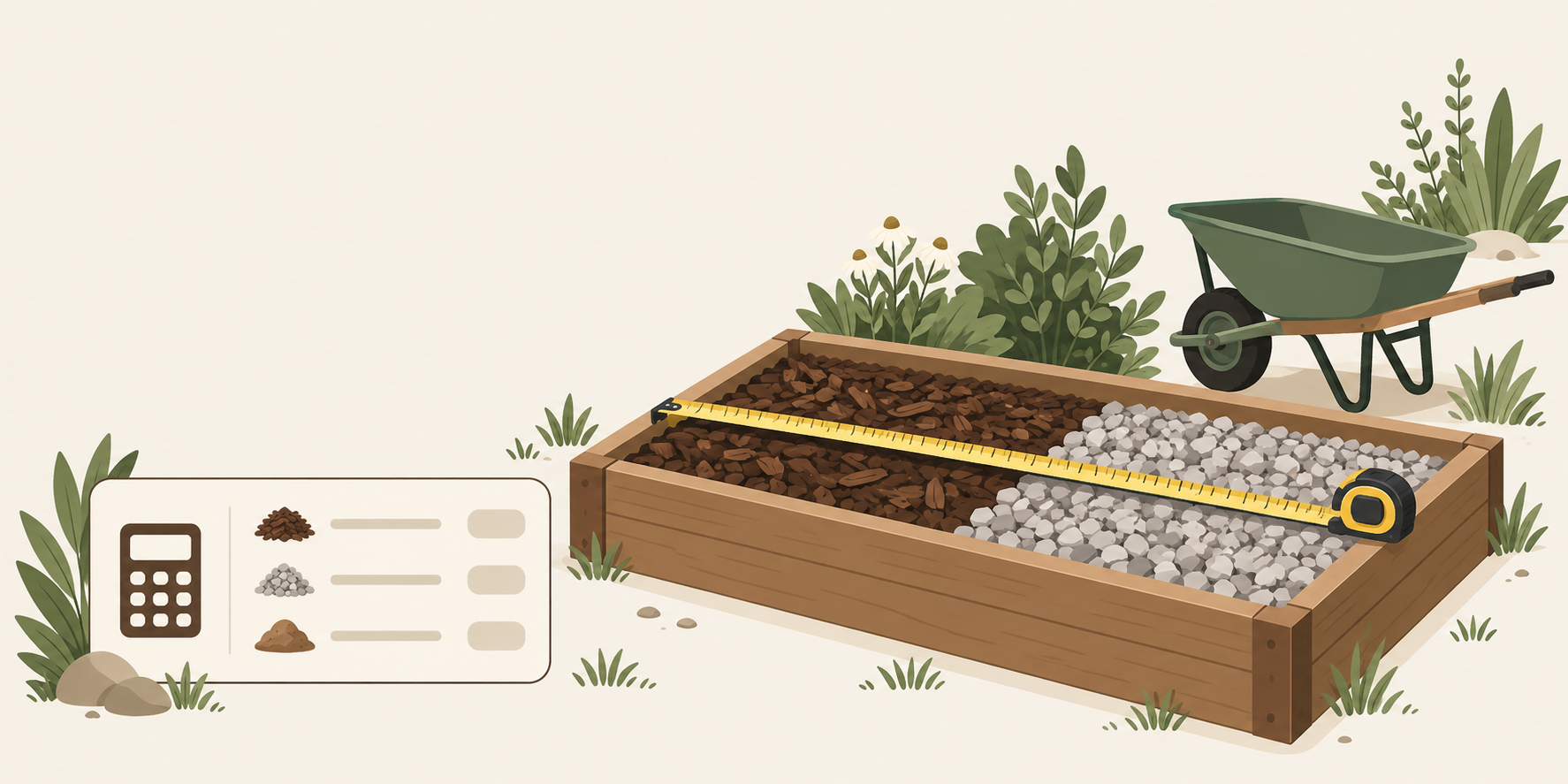
Measure your bed, path, or yard, choose a depth, and pick one of nine landscaping materials to get a clear estimate of how much you need. This calculator handles rectangles, circles, and multi part shapes like an L-shaped bed, and it gives you the answer in cubic yards, cubic feet, bag counts for both 2 cubic foot and 3 cubic foot bags, wheelbarrow loads, and estimated weight in tons. Nothing is sent anywhere and nothing reloads: change a number and the results update immediately.
Add one zone for a simple rectangle or circle bed, or add more zones for an L-shaped or multi-part project. Pick a depth and a material and the results update as you type.
Tools and supplies for this project
Once you know your quantity, here is the kind of equipment most mulch and gravel projects call for. Links go to Amazon.
- Bagged mulch for topping up small beds or matching a specific color to an existing bed.
- Garden landscape fabric to lay under mulch or gravel and slow weed growth.
- Garden bed edging to keep mulch or gravel contained along the bed line.
- Wheelbarrow sized to match the number of loads this calculator gives you.
- Garden rake for spreading and leveling mulch, gravel, or soil once it is delivered.
As an Amazon Associate, Gravel and Mulch Calculator earns from qualifying purchases made through these links, at no extra cost to you. These links point to categories of product, not a specific brand endorsement; pick the option that fits your project and budget.
Why material choice changes the number
A generic volume calculator tells you how many cubic yards fit a given area and depth, but it stops there. The actual number of bags you carry home, and the weight your truck or trailer needs to handle, depends on which material you are moving. A cubic yard of dry wood mulch weighs a few hundred pounds; a cubic yard of gravel or sand weighs well over a ton. This calculator carries a separate density for each of the nine materials listed above, so the bag count and weight figures are specific to what you actually plan to buy, not a generic average that happens to be close for one material and badly wrong for another.
What the free Depth Cheat Sheet adds
Once you know roughly what you need, the free Depth Cheat Sheet is a one page printable reference with the depth recommendation for common project types, mulch beds, pathways, under trees, vegetable gardens, and drainage areas, alongside how far one cubic yard stretches at that depth. It is meant to live in your glove box or garage during the project, not just on a screen.
What The Landscape Material Planner adds
For a full project across several zones, the paid Landscape Material Planner goes well beyond a single calculation: pre-built coverage tables for all nine materials at many depths, a density and weight reference for comparing supplier quotes, a method for measuring an irregular bed by hand, a budget grid for tracking multiple zones, a delivery checklist, and a full comparison of bagged versus bulk buying with the point where bulk becomes the better deal.
Guides for specific materials and projects
If you already know you are working with a particular material or project type, the guides below go into more depth than the calculator alone: how much mulch a typical bed needs, how bagged mulch converts to cubic yards, how much a yard of gravel actually weighs, how deep to lay mulch by use case, sizing gravel for a path, and using soil, compost, or sand calculators for the specific job in front of you.
Field procedure before you order
Start by marking the finished edge with paint, string, or a garden hose, then measure the marked shape, not the old bed edge. For a straight bed, take the length and width in feet at the widest usable points. For an irregular bed, split it into smaller rectangles and triangles, measure each part, then add the areas before you enter the total.
Check depth with a real reference before choosing it. One inch is about the thickness of two stacked boards cut from standard 1 by lumber. Two inches is a common light refresh layer. Three inches covers most bare soil well. Four inches is a heavy layer and can bury shallow edging or low plants if the bed was not prepared for it.
Remove weeds, sticks, trash, and loose old fabric before spreading new material. If old mulch is still soft and less than about 1 inch thick, it can usually stay. If old mulch has formed a crust, break it up with a rake so water can pass through. For gravel, scrape away soft soil or organic debris until the base feels firm under foot traffic.
Order only after you have checked access. A bulk delivery pile for 3 cubic yards can take a footprint about 8 feet wide by 8 feet long, depending on moisture and dumping angle. Leave room for the truck to raise the bed safely, and keep the pile out of drainage paths, sidewalks, and street gutters.
Equipment, spacing, and working dimensions
A 6 cubic foot wheelbarrow is common for yard work, but it is rarely moved full when loaded with gravel. For mulch, many users can move 4 to 5 cubic feet per trip. For gravel, plan closer to 2 to 3 cubic feet per trip unless the route is flat and short. A 50 foot carry with a slope can double the time compared with a flat 15 foot carry.
Use a steel rake for gravel and a leaf rake or mulch fork for bark mulch. A square shovel works better than a pointed shovel when cleaning the last material from a driveway pile. For depth checks, cut a scrap stick to the target depth and use it every 6 to 8 feet while spreading. This prevents the common pattern of too much material near the pile and too little at the far edge.
| Job condition | Practical figure to use | Why it matters |
|---|---|---|
| Wheelbarrow travel distance | Under 40 feet is efficient, over 80 feet is slow | Long carries add labor faster than most people expect |
| Mulch spreading rate | About 1 cubic yard per 30 to 60 minutes for one person | Wide open beds go faster than tight planting areas |
| Gravel spreading rate | About 1 cubic yard per 60 to 120 minutes for one person | Weight and leveling increase handling time |
| Clearance around plants | Keep 2 to 3 inches open around stems and trunks | Material piled against bark holds moisture and can cause decay |
| Edging height | Set edging at least 1 inch above finished gravel | This helps keep stone from migrating into lawn or soil |
Frequent mistakes and how to recover
Too much material was ordered. Do not spread the excess deeper just to use it up. Deep mulch can hold too much moisture, and deep gravel can roll under foot. Make a secondary pile on a tarp, then use it for thin top ups after settling. Mulch often settles noticeably after rain and a few weeks of weather.
Too little material was ordered. Stop spreading when the remaining uncovered area is still easy to measure. Measure that area only, use the same depth, and calculate the shortage. Feathering a thin layer over the whole bed makes the entire job look uneven and reduces weed control.
The depth is uneven. Pull material back from high spots with a rake and move it into low areas before adding more. For gravel paths, walk the surface after rough leveling. Your feet will show soft spots and ridges better than your eyes. Recheck depth at the edges because rakes often pull material away from borders.
The bed edge looks messy. Cut the edge first, not after spreading. A clean vertical soil edge 2 to 3 inches deep gives mulch a place to finish. For gravel, use rigid edging or pavers where traffic, mowing, or runoff will push stone outward.
Special cases that change the calculation
Sloped ground needs a depth decision based on the finished surface, not the uphill edge alone. Measure the plan area from above, then expect some extra handling because material slides downhill while raking. On steep beds, lighter mulch stays in place better when installed in thinner layers and watered between passes.
Tree rings need extra care. Keep material away from the trunk flare and avoid creating a raised cone. A useful field check is to see the flare at the base of the tree after the job is done. If the trunk looks like a telephone pole entering the ground, pull material back.
Drainage areas should not be treated like decorative beds. If water must move through the material, avoid mixing soil, leaves, and mulch into the stone. For a swale or drain edge, maintain the designed low line and do not fill it flat. More general calculator questions are covered on the FAQ.
Bagged and bulk material can also behave differently. Bags are easier for small patches, stairs, and tight gates. Bulk material is faster for open access, but it needs a dumping spot and cleanup time. If access is through a narrow gate under 36 inches wide, check that the wheelbarrow, cart, or buckets fit before the delivery arrives.